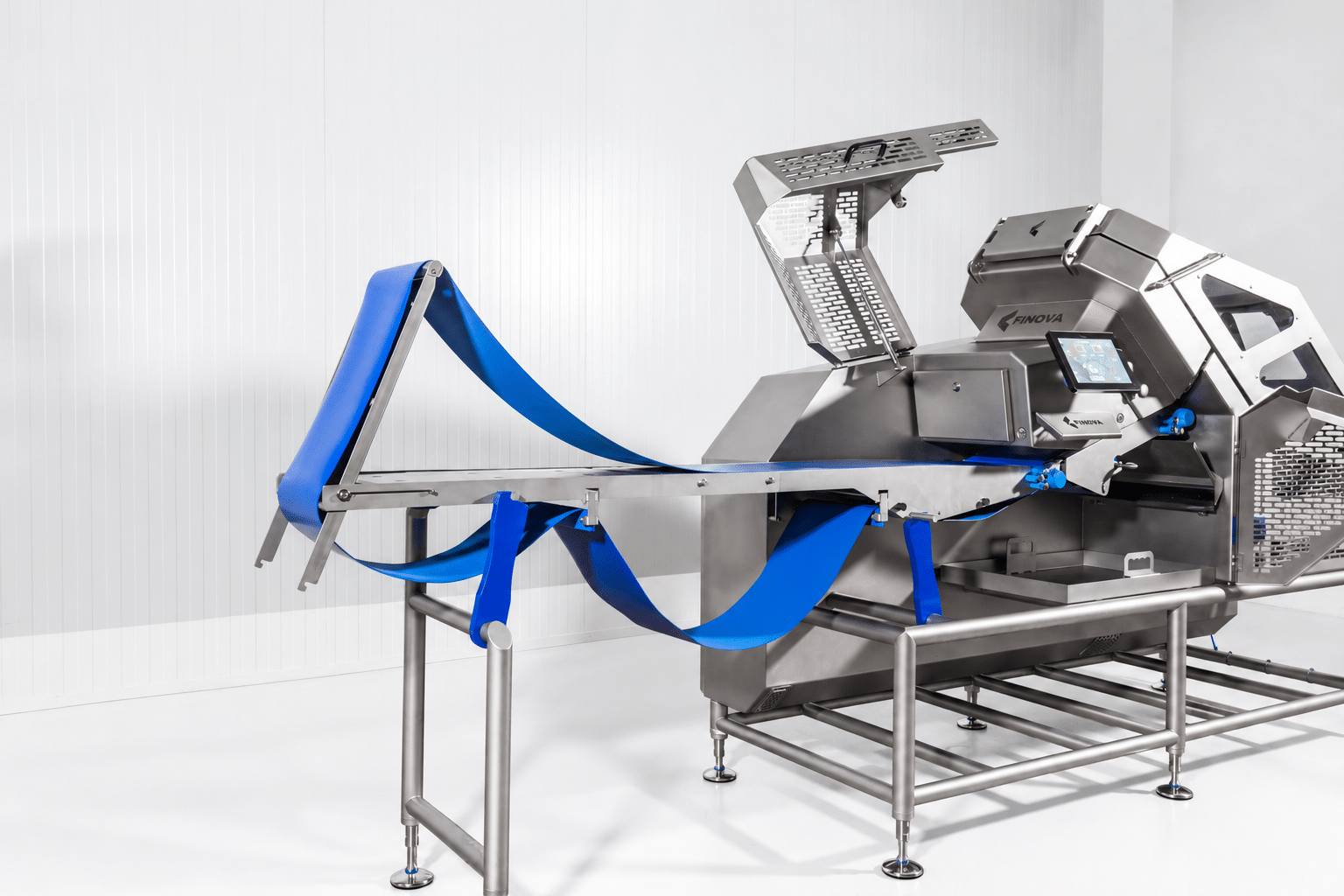
Reliability, Safety, and Production Continuity
Preventive maintenance for an industrial slicer consists of a series of scheduled cleanings, inspections, and adjustments performed before a malfunction occurs. The goal is to ensure that the machine always slices with the same precision, meets food safety requirements, and does not cause unplanned downtime on the production line.
Breakdowns on a slicing line are rarely sudden. Identifying them during a scheduled inspection allows for action to be taken before a shutdown occurs and reduces repair costs.
In the food industry, there is also a legal requirement: Regulation (EC) No. 852/2004 requires that equipment that comes into contact with food be kept clean, in good condition, and disinfected as often as necessary (EUR-Lex).
FINOVA approaches the maintenance of its SliceFil slicers from four angles: preventive maintenance contracts, automatic alerts on the machine itself, remote connection to technical support, and the use of standard replacement parts. In addition, each plant performs a daily cleaning routine.
Daily Cleaning: The Foundation of Preventive Maintenance
The slicer is cleaned every day, after each use, or whenever there is a change in batch. This is the most frequent maintenance task and the one that has the greatest impact on food safety.
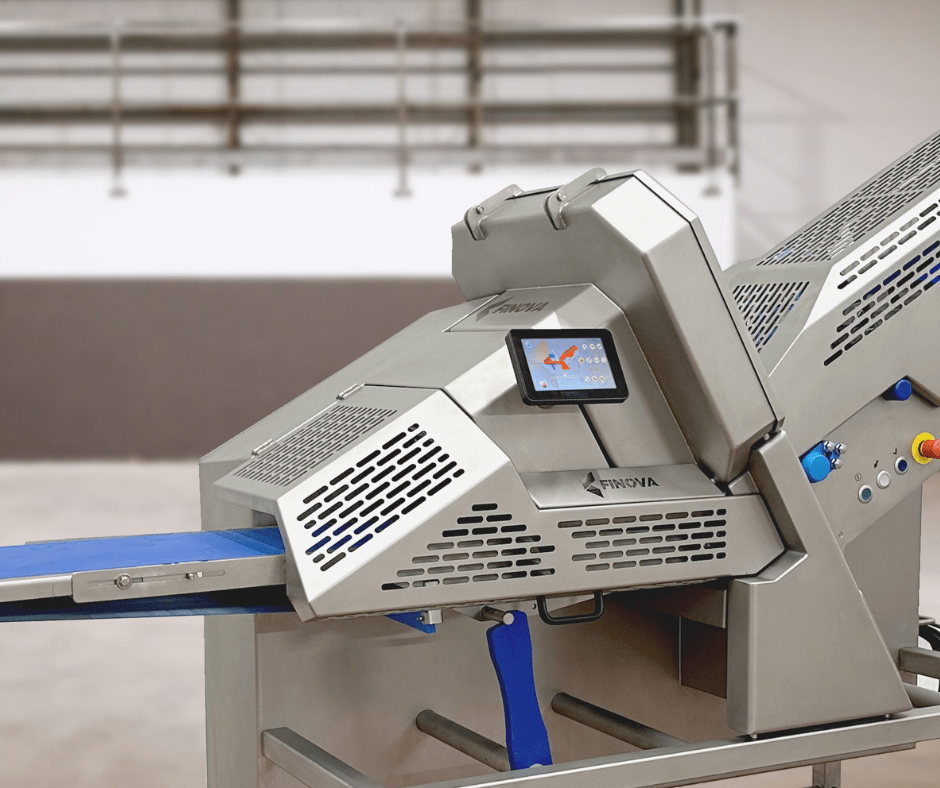
SliceFil slicers are designed to make this routine quick and easy. The infeed and outfeed belts and product-contact accessories can be installed and removed without special tools, which shortens cleaning time and streamlines the process. The assembly process is explained in the guide for tool-free removal of belts and accessories on SliceFil machines.
The daily cleaning protocol consists of four steps:
- Dry removal of product residue.
- Wash with detergents that are suitable for the food industry and specifically designed for surfaces such as stainless steel.
- Disinfect using the product and contact time specified by the supplier.
- Allowto dry completely before cutting again.
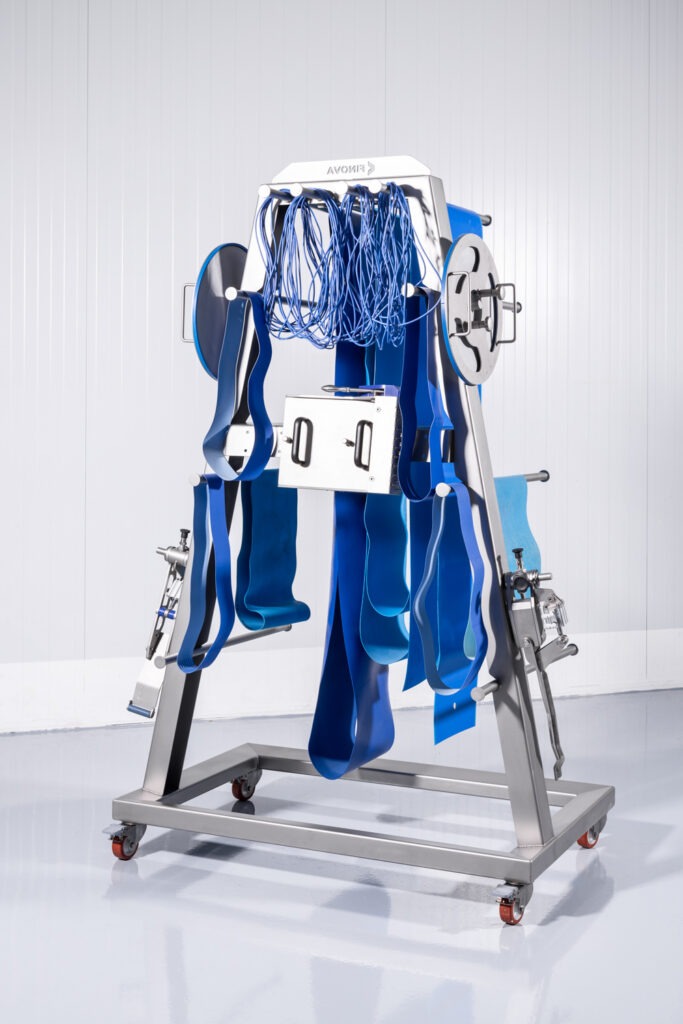
This same rapid-disassembly approach applies to complementary modules, such as the Interleaver and Underleaver systems, as well as other modules such as scales, discriminators, etc.
FINOVA Preventive Maintenance Contracts
FINOVA offers periodic maintenance contracts tailored to each customer’s needs. A FINOVA technician visits the facility at the intervals specified in the contract and inspects the machine under actual production conditions.
Each contract includes:
- Scheduled on-site visits at the customer’s facility.
- Inspection and maintenance of the slicer’smechanical and electronic components.
- Service intervals established in accordance with the contract.
- Prevention of breakdowns and optimization of machine performance.
The main benefit is that the slicer always operates under the best possible conditions and that the risk of unplanned downtime is minimized.
Automatic maintenance alerts on the control panel
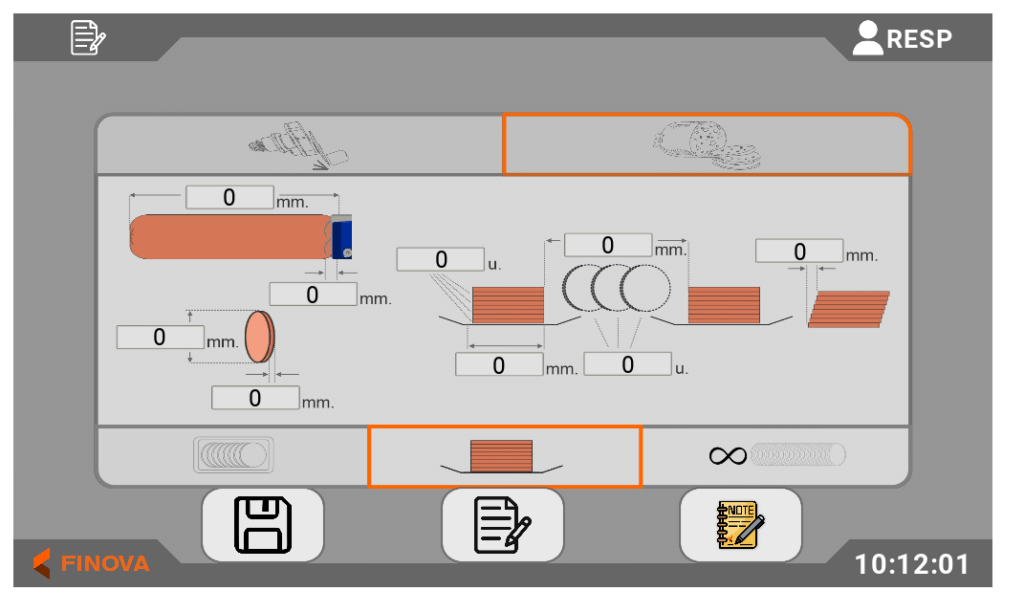
The control systems on FINOVA slicers can include predefined alerts that help operators perform routine maintenance tasks without having to rely on memory or a piece of paper. This option is available when purchasing the machine.
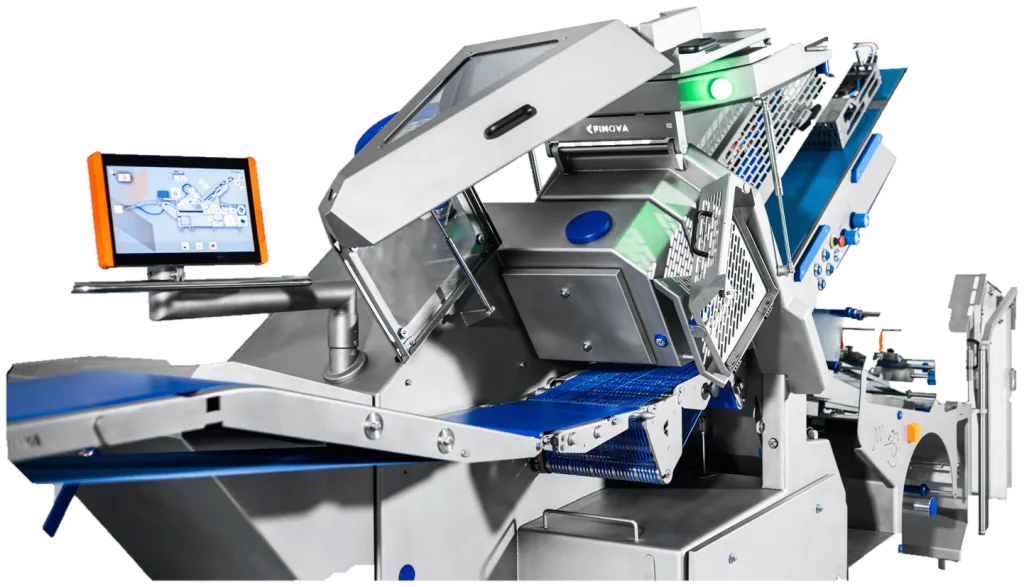
- Reminders for basic, daily, and periodic maintenance.
- Automatic alerts based on the parameters set on the machine.
- Alarms related to safety and operation.
- Support for the operator in daily routines.
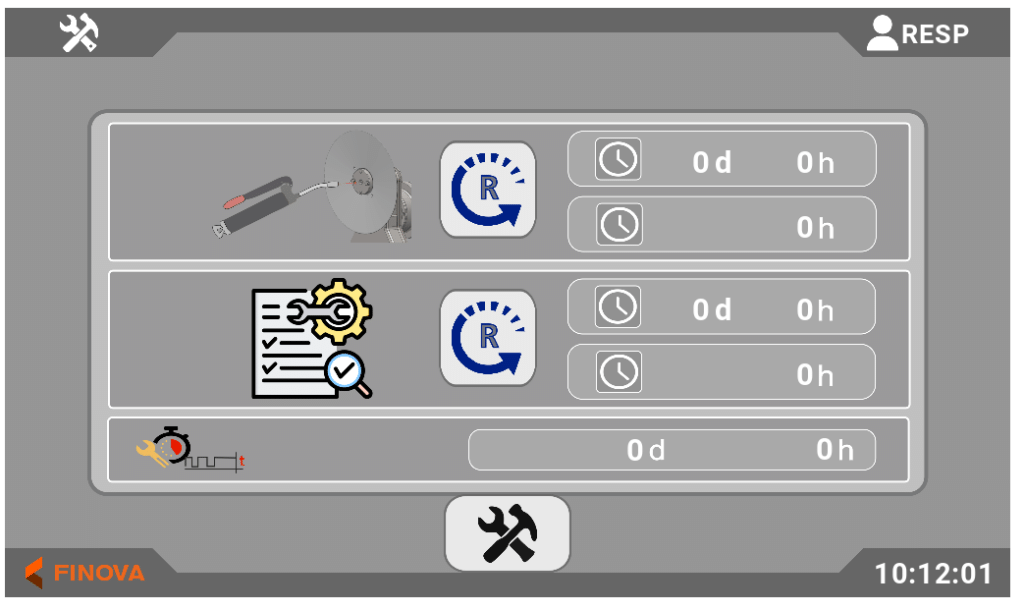
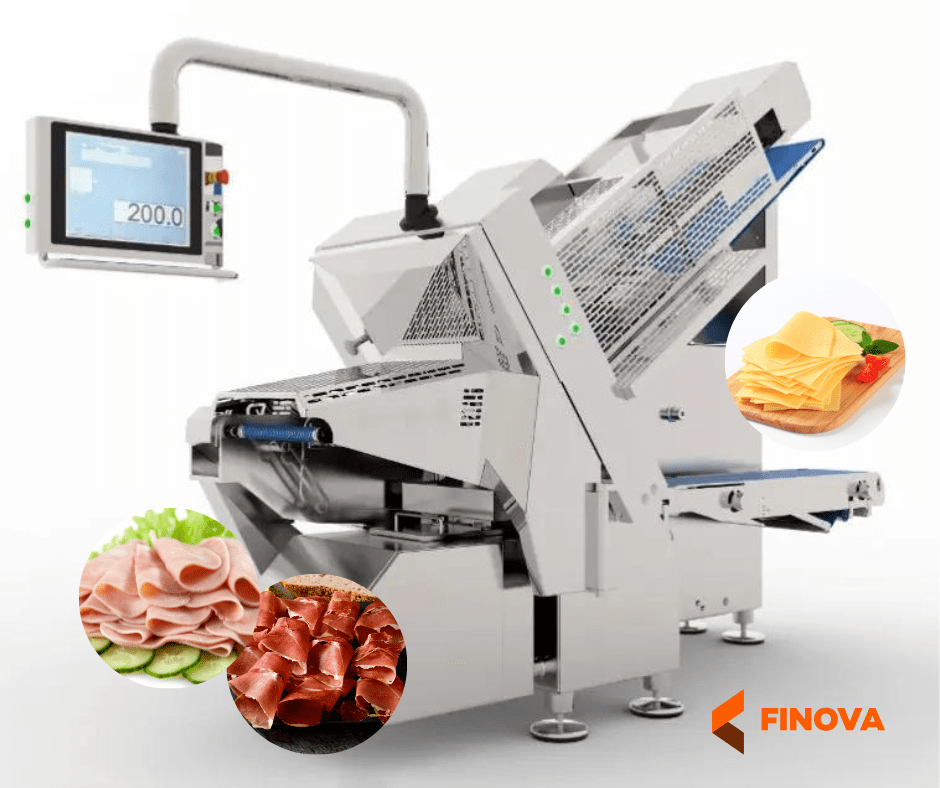
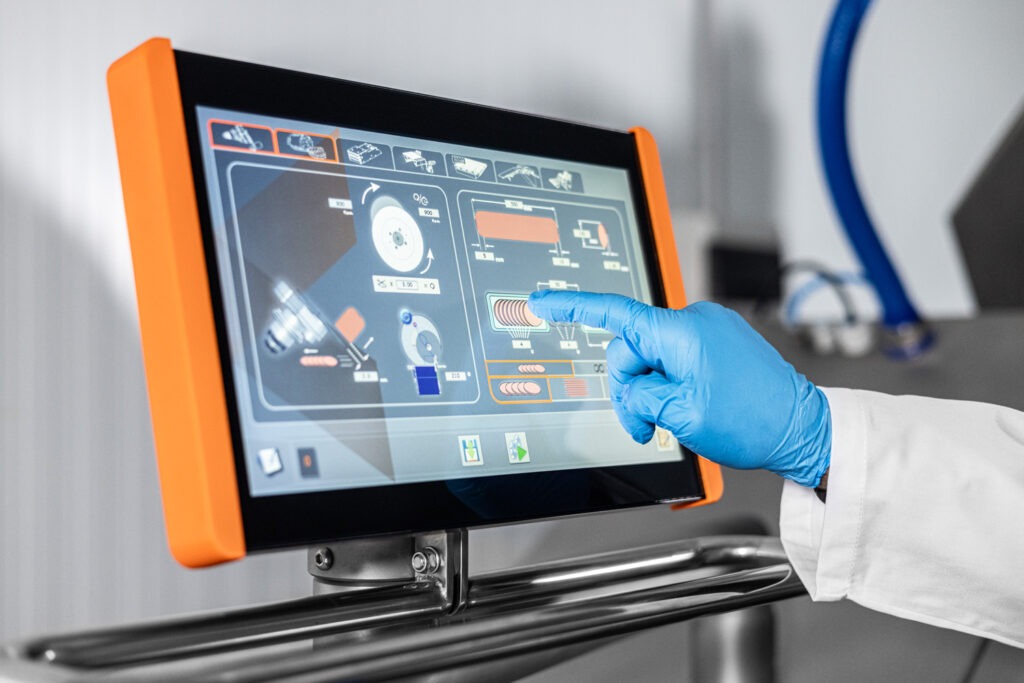
These alerts appear on the touchscreen used to control the machine. You can see how it works in our article on the HMI terminals for SliceFil machines. They make daily maintenance easier, help prevent incidents, and improve operator safety.
Remote Connection and Technical Support
FINOVA slicers can be equipped with a remote connection system, which is selected as an option at the time of purchase. When the machine issues an alert, FINOVA’s technical support team can connect to it remotely.
With the remote connection, technical support can:
- Access the machine’selectronic and control system.
- Diagnose errors and resolve issues remotely.
- Answer operators’questions about machineoperation.
- Resolve certain IT issues without having to go to the plant.
The result is faster technical support, with shorter response times and no unnecessary travel.
Standard replacement parts: faster repairs
Starting with the design phase, FINOVA prioritizes the use of standardized components and replacement parts that are readily available on the market.
- Standard commercial components.
- Spare parts that are easier to find and replace.
- Less reliance on custom-madeparts.
- Shorter wait times and fewer production stoppages.
When a part needs to be replaced, the plant does not have to rely on a single supplier or deal with long manufacturing lead times. Repairs are completed sooner, and the production line resumes operations sooner.
Who Does What in Preventive Maintenance
| When | What to do | Who |
|---|---|---|
| Daily or at each batch change | Cleaning, disinfection, and drying; visual inspection of the cutting edge | Plant operator |
| When indicated by the control panel | Basic and routine maintenance tasks | Operator, guided by the machine’s prompts |
| When the machine issues a warning | Remote Diagnosis and Troubleshooting | FINOVA Technical Support (with remote connection) |
| As specified in the contract or for a predetermined period of time | Complete mechanical and electronic inspection | FINOVA technician at the plant |
Conclusion: Prevention Leads to Better Production
Preventive maintenance extends the service life of industrial slicers, maintains their performance, and ensures uninterrupted production. The combination of daily cleaning, on-site maintenance, automatic alerts, remote assistance, and standard replacement parts can be summarized in four key points:
- Prevention: Anticipating potential breakdowns.
- Speed: Streamline technical support.
- Safety: Make the operator’s tasks easier.
- Continuity: Reduce production downtime.
Would you like a preventive maintenance contract for your slicer or to add remote connectivity to your next machine? Contact FINOVA’s technical team.