Food safety in industrial slicing is a critical factor in ensuring that sliced products reach the final consumer in optimal conditions of safety, quality and regulatory compliance. At this stage of the process, the food has already passed previous stages of transformation and is ready for consumption or packaging, which increases the demands in terms of hygiene, control and traceability.
For this reason, identifying and controlling Critical Control Points (CCPs) during slicing is essential to minimize microbiological risks, avoid cross-contamination and ensure reliable and repeatable production.
Poor management at this stage can compromise the entire production process, generate losses, product recalls or regulatory sanctions. Hence the importance of applying preventive systems based on well-defined CCPs, supported by technology and automation.
What are the critical control points to ensure slicing safety?
To guarantee food safety in industrial slicing, it is essential to identify and manage Critical Control Points (CCPs), as this phase is especially sensitive due to direct contact with surfaces, manipulation and environmental exposure during cutting.
- Hygiene of surfaces and equipment
Surfaces in direct contact with the product must be maintained in optimal hygienic conditions to avoid sources of contamination by organic residues. It is essential to use materials suitable for food use and a design that eliminates edges or dead areas where dirt can accumulate.
- Temperature control
Maintaining a stable temperature during cutting is key to preventing microbial growth. This involves minimizing the time the product is exposed to the environment.
- Waste management and continuous cleaning
During slicing, scraps and particles are generated that must be evacuated in a controlled manner. It is necessary to integrate waste disposal systems and continuous cleaning protocols that do not require stopping production.
- Traceability control and batch management
It is essential to record process parameters and store cutting recipes to associate each batch with a specific configuration, facilitating traceability and quality control.
Technology applied to food safety: Finova’s approach
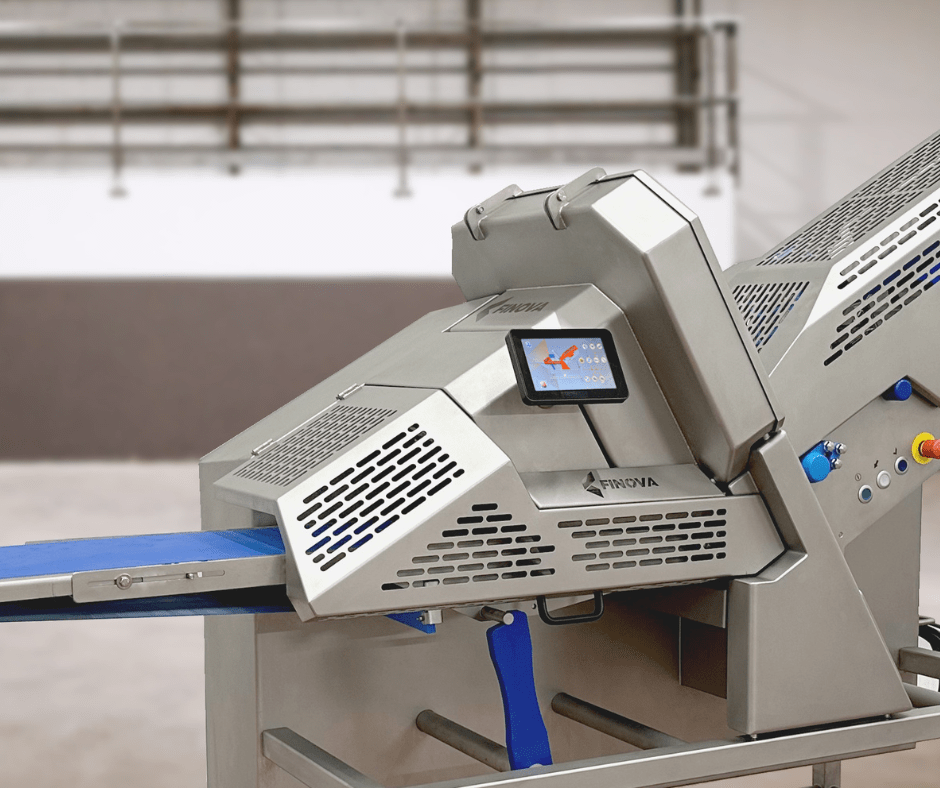
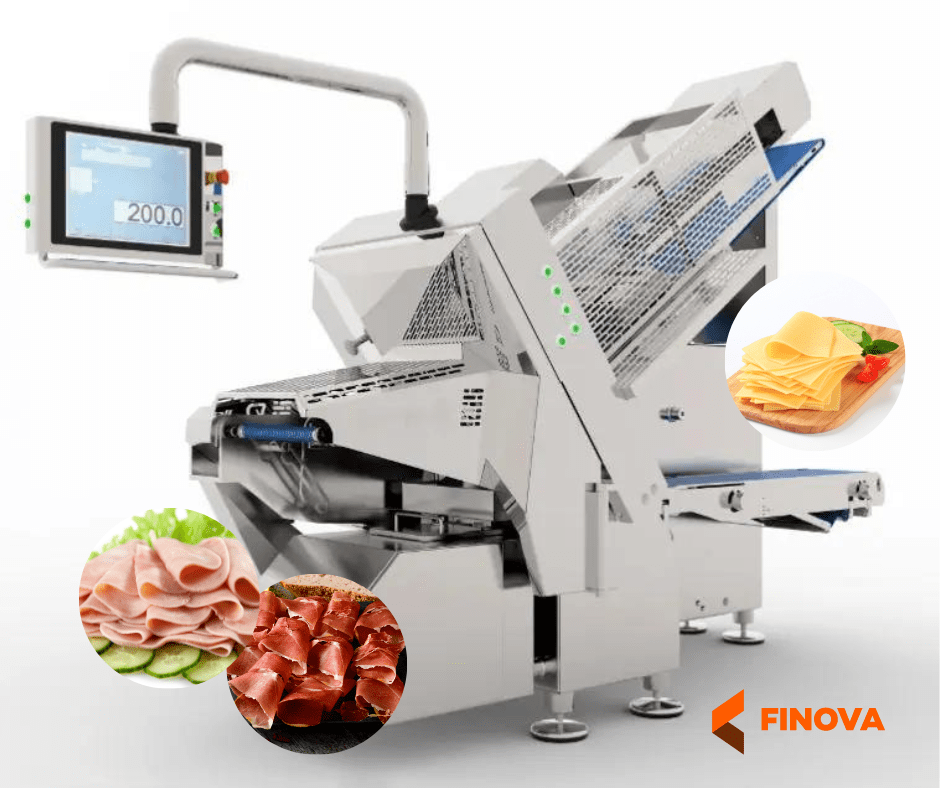
Finova’s SliceFil automatic slicers are specifically designed to integrate food safety as a structural part of the process, providing a direct response to the CCPs identified in industrial slicing.
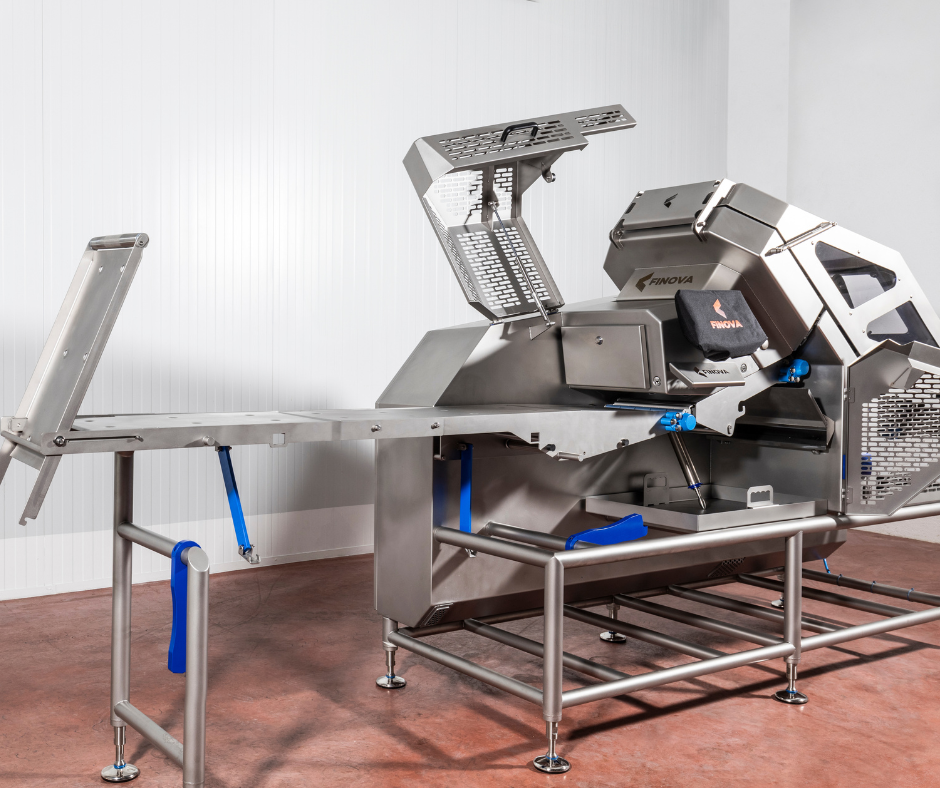
Ease of assembly and disassembly
One of the main advantages of its hygienic design is that all components are designed to be easily removable and reassembled, allowing:
- Quick access to internal parts
- Safe and efficient cleaning
- Reduction of line downtime
Hygiene of surfaces and equipment
SliceFils are constructed entirely of stainless steel, with smooth, accessible surfaces that eliminate areas where dirt could accumulate. All components are easy to disassemble, facilitating compliance with deep cleaning protocols without compromising productivity.
Temperature control
Process automation helps maintain the thermal regularity of the product, even in intensive production conditions, minimizing the time of exposure to the environment during cutting.
Waste management and continuous cleaning
The design of SliceFil slicing systems incorporates integrated waste evacuation systems and allows cleaning protocols to be applied without the need to completely stop production. Automatic waste ejection system once the piece has been sliced.
Traceability control and batch management
SliceFils have a recipe management system that stores cutting configurations, avoids erroneous manual adjustments and ensures that each batch is processed under the same parameters.
Reduction of manual handling (additional CCP)
The automation of product movement significantly reduces human contact, minimizing the risk of cross-contamination and increasing the overall health safety of the process .
Quick guide for quality and production managers
To minimize risks in industrial slicing, it is key:
- Clearly define the Critical Control Points (CCP) of the process.
- Use equipment with certified hygienic design and materials suitable for food use.
- Opt for automation to reduce manual handling and stabilize the process.
- Record recipes, parameters and batches to ensure complete traceability.
- Train staff in cleaning protocols and good operational practices.
The combination of appropriate technology and good practices is the best guarantee to comply with regulations, protect the consumer and ensure efficient and safe production.